

In Luxembourg’s robust alternative investment ecosystem, the pathway to fundraising depends significantly on the regulatory status of the AIFM. While some structures must rely strictly on reverse solicitation, authorised AIFMs benefit from EU-wide marketing capabilities, including formal pre-marketing and distribution rights under the Alternative Investment Fund Managers Directive (AIFMD).
This article focuses exclusively on Luxembourg AIFs managed by authorised AIFMs, outlining what is permitted when engaging with professional investors and what regulatory safeguards must be respected.
An authorised AIFM is a fully licensed alternative investment fund manager regulated by the CSSF and compliant with the Law of 12 July 2013, which transposes the AIFMD into Luxembourg law. Once authorised, the AIFM may manage and market AIFs across the EU using the AIFMD passport.
This status is required for AIFMs managing:
Authorised AIFMs are uniquely positioned to pursue regulated and scalable capital raising strategies. Authorised AIFMs can:
This passporting capability is a key reason Luxembourg is the preferred jurisdiction for scaling cross-border AIF strategies.
Raising capital for an Alternative Investment Fund (AIF) in Luxembourg is not a single-step event—it is a regulated, multi-phase lifecycle. The early stages of this process are determined primarily by the fund’s regulatory setup, specifically whether it is managed by a fully authorised AIFM or a sub-threshold (registered) AIFM. Below is a visual overview of the typical investor journey, starting from first contact through to capital execution:

Two distinct regulatory tracks:
AIFs with an authorised AIFM:
These funds benefit from the full AIFMD marketing passport, allowing them to actively engage professional investors throughout the EU. Their investor lifecycle begins with:
Sub-threshold AIFs (no authorised AIFM):
These are subject to significant restrictions. They cannot legally market their funds and must instead rely on:
After these distinct initial phases, both tracks generally converge at the same steps:
Pre-marketing is the set of activities conducted by an authorised AIFM or its intermediaries to test the interest of potential professional investors before the AIF is formally offered. These activities must not constitute an offer or placement of fund units.
The AIFM must notify the CSSF within 2 weeks of commencing pre-marketing. This includes:
Best Practice Tip: Maintain internal records of all materials and communications distributed during pre-marketing for audit purposes.
Marketing refers to any direct or indirect offering or placement of units or shares of an AIF to professional investors within the EU, once the fund is ready for subscription.
Authorised AIFMs may market the AIF across all EU Member States by notifying the CSSF and submitting a marketing notification that includes:
Once the CSSF approves and transmits the notification to host authorities, the AIFM may begin marketing without further national approvals.
Under Luxembourg’s Anti-Money Laundering Law (12 November 2004) and CSSF Regulations (e.g. RCSSF No 12/02 and 16/07), an AIFM or GP is legally required to conduct investor due diligence before accepting any subscription or establishing a business relationship with an investor.
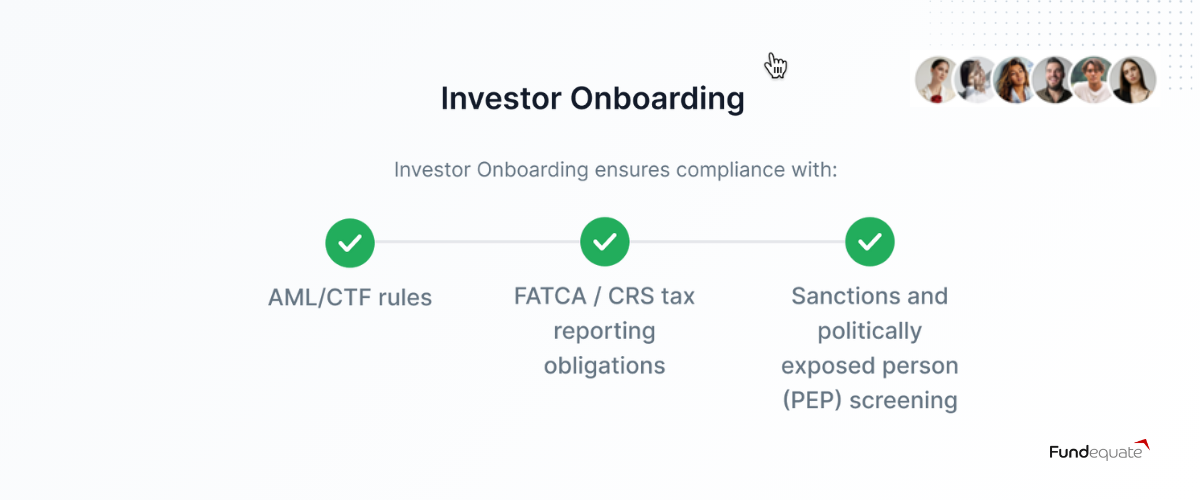
This phase ensures compliance with:
No investment commitment, subscription, or document execution may occur until KYC/AML checks are completed and validated. This is mandated under Luxembourg AML regulations.
Authorised AIFMs managing Luxembourg AIFs have a powerful toolkit to engage EU professional investors through pre-marketing, formal marketing, and onboarding phases. By aligning their strategy with the AIFMD framework and CSSF guidance, fund sponsors can scale capital efficiently while maintaining full regulatory compliance. Fundequate helps GPs and AIFMs navigate every step of this journey—from structuring to distribution to onboarding—through integrated workflows and regulatory support.

Fundequate Sàrl is a company registered and domiciled in Luxembourg. We provide innovative solutions to simplify fund structuring, administration, and investor onboarding, ensuring compliance, transparency, and efficiency for fund managers and investors.


