Tax-transparent SCSp vehicles with admin handled, so you can focus on the deal. Each syndicate gets its own vehicle, set up in days rather than months, with onboarding, KYC and AML handled for every backer regardless of ticket size. You keep the relationship and the carry. We keep the cap table, the paperwork and the filings.

A founder will not take thirty individual shareholders onto the register, and a later investor will not want to negotiate a shareholders' agreement with each of them. The syndicate vehicle solves that: it holds the position, your backers hold units in it, and the company deals with one entity and one signature.What it does not solve by itself is everything behind the line — subscription forms, identification of every backer, the register, the drawdown, the waterfall at exit and the filings in between. That is the part we take on.
An SCSp formed for the syndicate: your backers come in as limited partners, with liability capped at what they commit, while the general partner carries unlimited liability — in practice a dedicated company, so the exposure does not sit with you personally. The partnership is constituted by private agreement, which means no notary and no minimum capital; an extract goes to the RCS and the beneficial owners to the RBE.
Art. 320-1 to 320-9, Law of 10 August 1915 on commercial companies; Law of 13 January 2019 on the register of beneficial owners. Tax transparency depends on the vehicle's activity and terms and should be confirmed for each structure.

Subscription forms, AML/KYC under the Law of 12 November 2004, beneficial owner evidence where a backer invests through a company, FATCA and CRS self-certification, and — where the regime requires it — confirmation that the backer qualifies. The same process runs for a EUR 5,000 ticket and a EUR 500,000 one, in the portal rather than across thirty email threads, and you see who is cleared and who is still outstanding.
Bookkeeping and capital accounts for the vehicle, annual accounts, VAT where it applies, RBE updates, and the anti-money-laundering monitoring that continues after onboarding rather than ending with it. Where the vehicle qualifies as an alternative investment fund, the manager's obligations under the 2013 Law sit on the same calendar.
One register of partners and one line on the company's cap table, with commitments, units and transfers recorded as they happen. Between the investment and the exit, your backers get position, cost, current value and the basis behind it. A syndicate that reports twice a year raises its next deal faster than one that goes quiet after the wire.

Trade sale, secondary or listing: proceeds are received by the vehicle, the waterfall is applied exactly as written in the partnership agreement, and your carry and any fee are computed from it rather than re-derived by hand while everyone waits to be paid. Each backer gets their own statement — then the vehicle is wound up and the final filings are made, instead of accruing costs for years.
Angel syndicates have outgrown the shared spreadsheet. A lead who can bring EUR 500,000 to a round by aggregating thirty cheques is a genuinely useful investor to a founder — but only if the thirty cheques arrive as one entity, one signature and one line on the register. The vehicle is what makes that possible, and the work behind the vehicle is what decides whether the model survives the third deal.
An SCSp under Articles 320-1 and following of the Law of 10 August 1915 is constituted by private agreement: no notarial deed, no minimum capital, and an extract filed with the RCS rather than a full set of articles. That is why a syndicate vehicle can exist in days where a company would take weeks, and why the economics still work on a deal of a few hundred thousand euros. Properly structured it is also tax-transparent, so backers are taxed on their share in their own hands rather than at the level of the vehicle — though transparency follows the vehicle's actual activity and terms, not its name.
A vehicle that raises capital from a number of investors and deploys it according to a defined policy, for their benefit, is an alternative investment fund under Article 1(39) of the Law of 12 July 2013 — whatever it is called. The ESMA guidelines on key concepts of the AIFMD set out how that test is applied, including when a joint venture or a genuinely operating holding falls outside it. Where the vehicle is an AIF, its manager comes within the 2013 Law, and below the Article 3 thresholds that means registration with the CSSF. The cost of getting this wrong is not a fine on day one; it is a question from a later investor's counsel that the lead cannot answer.
Anti-money-laundering obligations under the Law of 12 November 2004 do not scale down with the ticket. A EUR 5,000 backer needs the same identification and verification as a EUR 500,000 one, and a backer investing through a holding company brings a beneficial owner chain with them. Done over email, that work costs more than the syndicate earns. Done once, in a portal, with the evidence stored against each backer and reusable for the next deal, it stops being the reason a lead caps the syndicate at ten people.
The distribution is where a syndicate's reputation is made. Proceeds arrive at the vehicle, the waterfall allocates them between backers and the lead's carry, and each backer wants to see their own figure with the calculation behind it — quickly, and without a round of corrections. After that the vehicle has to be wound up: a partnership left open accrues accounting, filing and bank costs for years, and leaving it to drift is the most common way a profitable deal ends on an unprofessional note.
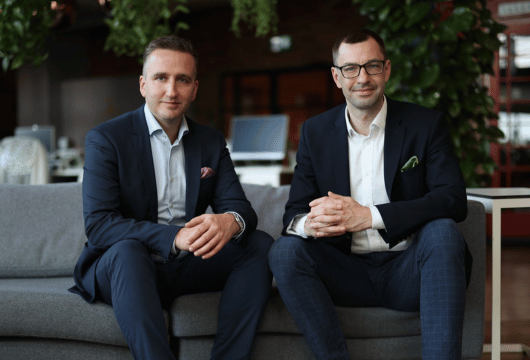
Most leads come to us with an allocation already agreed and a closing date in mind. A short call is usually enough to settle the vehicle, the terms and what your backers will be asked for.

Fundequate Sàrl is a company registered and domiciled in Luxembourg. We provide innovative solutions to simplify fund structuring, administration, and investor onboarding, ensuring compliance, transparency, and efficiency for fund managers and investors.


