
Sub-threshold AIFs, syndicate SCSps, SOPARFI holdings and single-asset SPVs. We settle the regime with you, then run the incorporation end to end — notarial deed, RCS, RBE and tax registration — with one point of contact from proposal to first bank transfer.

Service proposal prepared for the chosen vehicle and regime, signed, then a kick-off call with the onboarding team.

Documents requested on the basis of your structure, then reviewed and analysed by the onboarding team.
Coordination with your legal advisor on the articles or the LPA, checking completeness before anything goes to the notary.

Bank or payment institution selected and onboarded, initial share capital wired, capital blocked until the deed is signed.

Deed signed before the notary, capital unlocked by the bank, entity registered with the RCS and RBE and operational.
Four structures cover most of what our clients build. Each carries a different regulatory footprint, and that footprint should be settled before drafting starts.
A fund whose manager stays below the AIFMD thresholds and registers with the CSSF instead of seeking full authorisation. In practice an SCSp or an SCA: closed-ended, drawdown capital, a defined investment period.
Art. 3(2)–(3), Law of 12 July 2013
A special limited partnership formed per deal or per syndicate. Tax-transparent, no minimum capital, constituted by private agreement — the lightest way to pool backers behind a single ticket without building a fund around it.
Art. 320-1 to 320-9, Law of 10 August 1915
A fully taxable resident company used to hold participations. Not a regulated product: it relies on the participation exemption and Luxembourg's treaty network rather than on a fund regime, and it files like any commercial company.
Art. 166 LIR; Regulation of 21 December 2001
One asset, one balance sheet. An S.à r.l. or S.A. holding a property, a loan, a co-investment or an escrow position, ring-fenced from the rest of the group and easy to transfer or wind down on its own.
Law of 10 August 1915
Both limbs are tested on the assets of all AIFs the manager manages, directly or by delegation. Confirm the position in writing before the structure is built around it.
Total assets under management, including assets acquired through the use of leverage.
Applies only to unleveraged portfolios carrying no redemption rights exercisable for five years from the date of initial investment in each AIF.
Luxembourg holds the largest share of European alternative fund assets, and the reason is rarely the tax rate alone. It is the combination of a stable legal framework, a regulator that understands cross-border structures, and a service ecosystem — notaries, banks, auditors, administrators — that has handled the same situations thousands of times. For a manager raising a first fund, that means the path is known. It does not mean it is simple.
The first decision is not the legal form but the regime. A manager below the AIFMD thresholds registers with the CSSF under Article 3 of the Law of 12 July 2013 and avoids the obligations of Chapter 2 — no authorised AIFM, no depositary requirement flowing from the manager's status, no remuneration rules. Above the thresholds, full authorisation applies, with a cost base and operating model that must exist before the first closing rather than after it.
The thresholds are often quoted incompletely. EUR 100 million covers assets under management including anything acquired through leverage. The EUR 500 million figure applies only to portfolios that are unleveraged and carry no redemption rights exercisable for five years from the date of initial investment. Managers who read only the second number and build a structure around it discover the problem at the worst possible moment — usually when an investor's counsel asks for the registration file.
The product regime is a separate question from the manager regime. A RAIF under the Law of 23 July 2016, a SIF under the Law of 13 February 2007 or a Part II fund each carry their own depositary and reporting obligations regardless of whether the manager is registered or authorised. Settling both regimes at the same time, rather than sequentially, avoids the most expensive category of restructuring.
Once the regime is settled, the form becomes a practical question. A special limited partnership (SCSp) under Articles 320-1 and following of the Law of 10 August 1915 needs no notary, no minimum capital and no separate legal personality — which is why syndicate vehicles and sub-threshold funds cluster there. A société à responsabilité limitée requires a notarial deed and EUR 12,000 of paid-up capital; a société anonyme or a société en commandite par actions requires EUR 30,000. Each of those figures has to sit in a blocked bank account before the notary will sign, which is why bank onboarding sets the critical path on most incorporations.
Once the regime is settled, the form becomes a practical question. A special limited partnership (SCSp) under Articles 320-1 and following of the Law of 10 August 1915 needs no notary, no minimum capital and no separate legal personality — which is why syndicate vehicles and sub-threshold funds cluster there. A société à responsabilité limitée requires a notarial deed and EUR 12,000 of paid-up capital; a société anonyme or a société en commandite par actions requires EUR 30,000. Each of those figures has to sit in a blocked bank account before the notary will sign, which is why bank onboarding sets the critical path on most incorporations.
An entity that exists is not an entity that operates. The RCS filing produces an extract, the beneficial owner declaration under the Law of 13 January 2019 has to follow, tax and VAT registration have their own timelines, and the first financial year brings bookkeeping, statutory accounts and annual filings. For groups running several vehicles across Luxembourg and Poland, the administrative load compounds faster than the number of entities suggests — which is the point at which a single provider and a single data set stop being a convenience and start being the difference between reporting on time and reporting late.
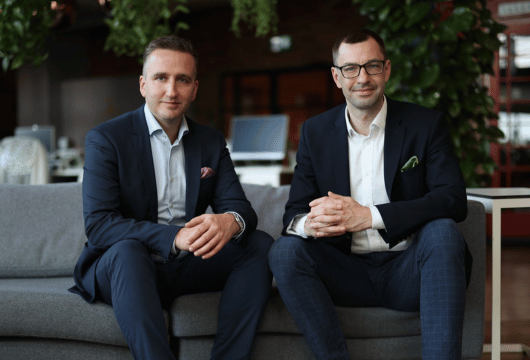
Setting up a fund involves decisions that are hard to reverse once investors are in. We've been through it many times and are happy to talk it through with you.

Fundequate Sàrl is a company registered and domiciled in Luxembourg. We provide innovative solutions to simplify fund structuring, administration, and investor onboarding, ensuring compliance, transparency, and efficiency for fund managers and investors.


