Report once, and every investor gets what they need. Financial figures, KPIs and your cap table live in one place, with templates built to the standards VC and PE funds already use. Whether your lead asked you to use it or you came looking for something better than a spreadsheet and a mailing list, the quarter stops being a scramble.

The seed fund wants a spreadsheet by the 15th. The Series A lead has a portal with mandatory fields. One angel asks by email, when he remembers. And the fund that joined last round sent a template as a PDF, with fields defined differently from everyone else's.
You answer the same questions four times in four shapes, and the version each investor holds drifts away from the others. That is not a reporting problem. It is a format problem.

Write the narrative once — what happened, what is next, where you need help — alongside the numbers. It publishes to every investor entitled to see it, with the date it went out recorded against each one. No more wondering who received the last version and who did not.

Revenue, gross margin, EBITDA, cash position, runway, headcount and the metrics specific to your model, each entered against a definition that stays fixed — so the trend line still means something twelve quarters later. Enter them by hand or connect your accounting system and let them flow.

The plan you presented at the last round, against what actually happened, with runway recalculated as burn moves. Investors see the variance and the reason for it in the same place — which is a different conversation from discovering a three-month gap when the next raise starts.

Your shareholder register, rounds, option pool and convertibles, with the documents behind each of them. Useful between quarters rather than only at reporting time — and it means the data room for your next round starts half built instead of empty.

A lead with a board seat, an angel holding one per cent and a fund that joined at Series B do not need the same view. You set access per investor, change it when the cap table changes, and see who opened what. Nobody sees more than you grant.
Founders rarely argue that reporting is pointless. They argue that it is disproportionate — that producing four versions of the same quarter, in four shapes, for people who already sit on the cap table, takes time that should go into the business. The complaint is fair. The fix is not reporting less; it is reporting once.
A venture or private equity fund reports to its own investors every quarter, and those reports are built from portfolio company figures. A fund that cannot produce them on time has the same problem with its LPs that it is creating for you. At year end the pressure is sharper still: the fund has to put a value on its holding in your company, that value feeds its net asset value, and it has to stand up to an auditor. The figures behind it come from you. None of this makes the request less irritating, but it does explain why it does not go away — and why a fund will chase it.
Numbers, narrative and an ask. The numbers are the same every quarter — revenue, margin, burn, runway, headcount, plus the two or three metrics specific to your model — because consistency is what makes a trend readable. The narrative is short: what changed, what is coming, what went wrong. The ask is the part founders skip and investors value most: an introduction, a hire, a customer. An update that only reports is a filing. One that asks is a conversation.
Cash position divided by net monthly burn, stated in months, as at a date. Every investor on your cap table calculates it whether you provide it or not, and if their number differs from yours the next conversation starts in the wrong place. Give it, state the assumptions behind it, and update it when those assumptions change rather than when someone asks.
Diligence on a Series A or B looks backwards: twelve to twenty-four months of figures, a clean cap table, consistent definitions, and documents that match what was reported at the time. A company that has reported consistently hands that over in a week. A company that has not spends a month rebuilding it from invoices and memory, while the term sheet waits and the lead starts asking why the numbers moved.
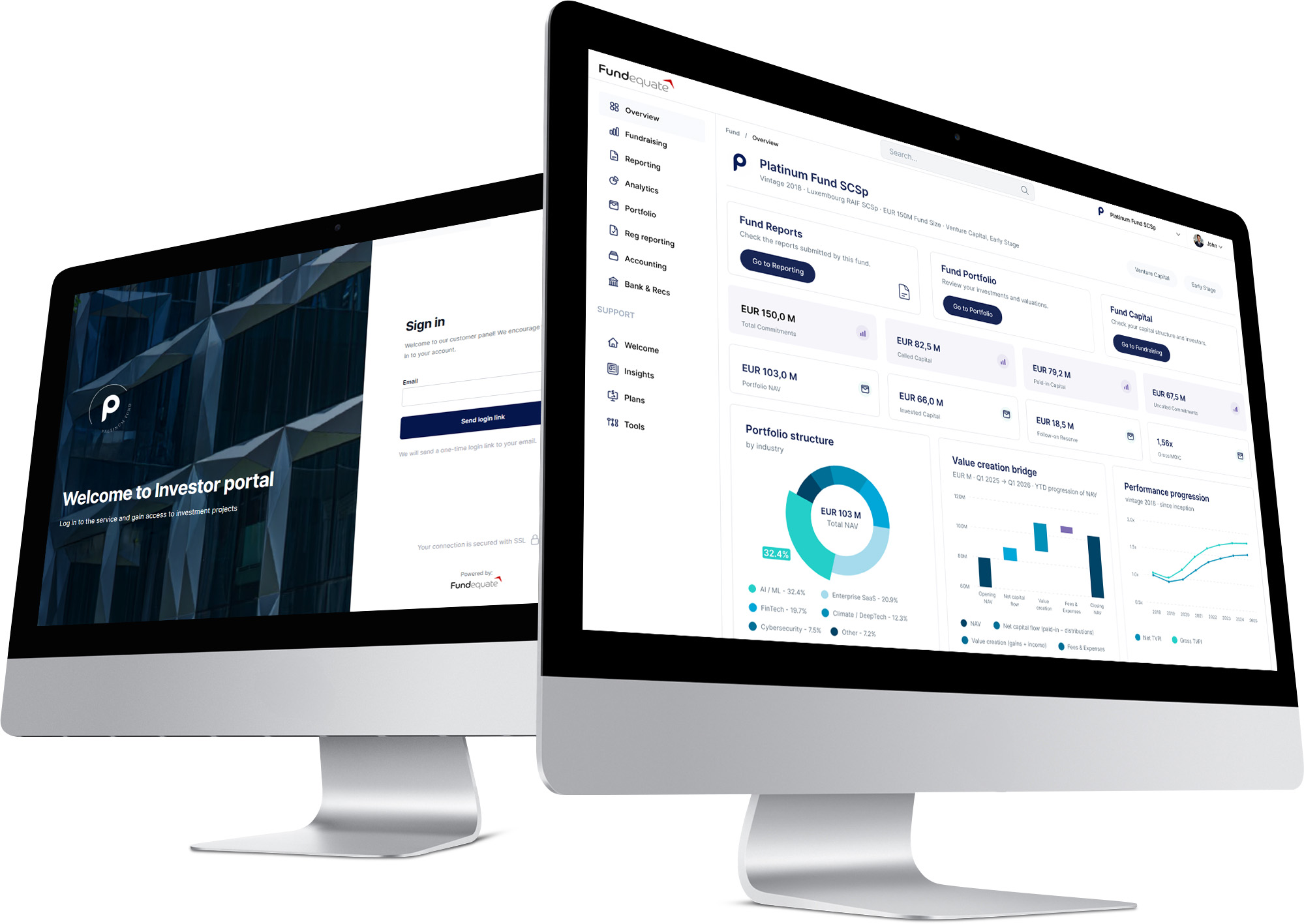
Send us what your investors currently ask for — the spreadsheet, the portal screenshot, the PDF someone emailed you — and we will show you what it looks like as one submission.

Fundequate Sàrl is a company registered and domiciled in Luxembourg. We provide innovative solutions to simplify fund structuring, administration, and investor onboarding, ensuring compliance, transparency, and efficiency for fund managers and investors.


